Master Craftsmen Highly Functional Attention to Detail Passion, Pride and Dedication Wealth of Experience

opus 38The result is an instrument of great color and flexibility.

St. Paul’s Roman Catholic Church, Princeton, NJ

1925 Aeolian Skinner Opus #537
PJM 2002–4 manual, 65 rank SpecificationsTake-out, Production & Installation

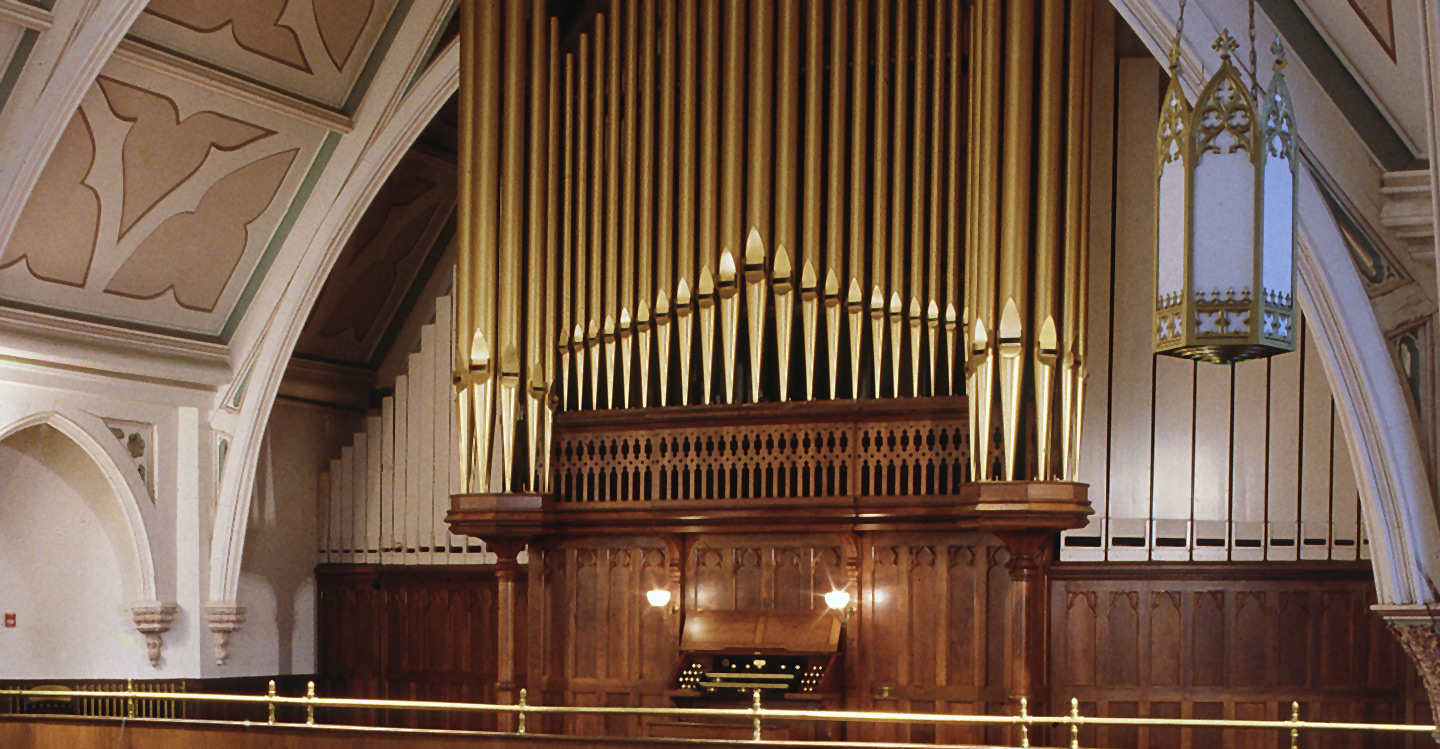
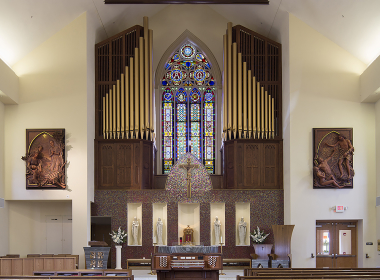
opus 38For almost the past year, the buzzword around the shop has been “Princeton”! Since May, we have been involved in the re-building of Ernest Skinner’s Opus 537 in St. Paul’s Catholic Church in Princeton, New Jersey. Originally built in 1925 for the recital hall at Baltimore’s Peabody Conservatory of Music, the instrument was modified in the 1940's and again in the 1950's by Aeolian-Skinner and used until changing needs by the conservatory had rendered it unneeded by the 1970s. It sat unused for some time until being sold to St. Paul’s in the early 1980s. At that time it was modified by a local builder to fit into the gallery and chambers at the back of the church. By the early 1990s it was evident that the instrument was in need of a major rebuild if it was going to survive. Wiring failure and poor winding were compounded with layout and installation problems that threatened to silence the instrument forever.

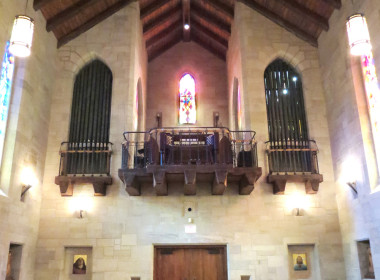
Due to an expanded music program the church decided to rebuild the instrument and remove the existing clutter of organ components in the gallery. As a result, the church challenged us to find a way to fit as much of the original instrument as possible into the chambers without compromising the tonal concept.

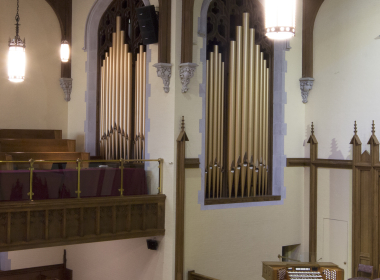
Since the original Skinner chests were too deteriorated for this retrofit, we decided to replace them with new custom-built Pitman chests. We did, however, retain and rebuild all of the E.M. Skinner/Aeolian/Skinner offset chests and regulators. With careful engineering and planning, we were also able to place all of the organ components into the two chambers. The only exception is the bottom octave of the 32’ Bourdon, located along the back wall of the gallery, symmetrically framing the existing rose window.

opus 38

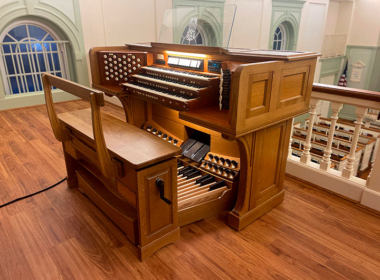
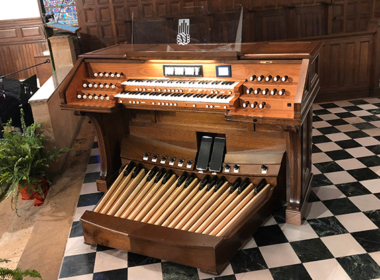
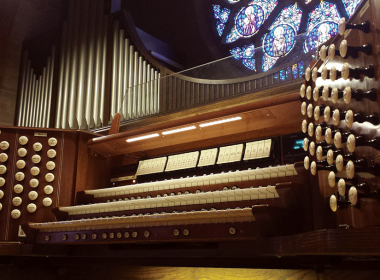
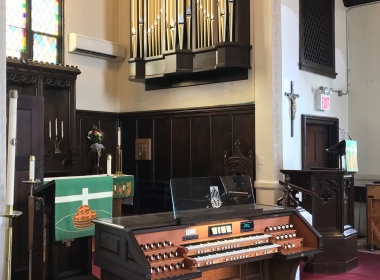
The sixty-four ranks of pipes were all cleaned and repaired. Where necessary, replacement pipes were obtained to fill in what had been lost or damaged, all in the name of restoring the “Skinner sound” to this majestic instrument. The console, an Aeolian-Skinner replacement at the time of the ‘50s re-working, was rebuilt utilizing the shell, keyboards and pedal board along with the ivory drawknob heads. The rest of the console mechanisms were replaced. Harris drawknob actions were installed along with Peterson solid-state relays and combination actions to provide the latest in state-of-the-art controls including 99 levels of memory and MIDI with playback and transposing capability. The result is an instrument of great color and flexibility.

As an instrument that was originally built for teaching and for performance presentations, it will still be a marvelous recital organ and will, at the same time, be an extremely flexible liturgical instrument to support the changing and growing needs of the parish's music program. Dedication was on Friday, November 22, 2002 featuring one of America’s leading concert organists, Todd Wilson.

Return to top.     Download PDF

St. Paul’s Roman Catholic Church, Princeton, NJ

1925 Aeolian Skinner Opus #537 / PJM 2002–4 manual, 65 rank
Electric Action
Great Swell Choir Solo Pedal
16' Bourdon 16' Echo Lieblich 16' Gamba 8'Doppel Flute 32' Bourdon
8' Principal 8' Geigen Prinzipal 8' Violin Diapason 8' Violincello 16' Contra Bass
8' Claribel Flute 8' Gedackt 8' Concert Flute 8' Cello Celeste 16' Bourdon
8' Wald Flute 8' Gamba 8' Viola 4' Orchestral Flute 16' Violone
8' Gemshorn 8' Gamba Celeste 8' Viola Celeste 8' Tuba Mirabilis 16' Gamba Ch
4' Principal 8' Voix Celeste II 4' Principal 8' French Horn 16' Echo Lieblich Sw
4' Flute 8' Flauto Dolce 4' Flute Harmonique 8' English Horn 16' Bourdon Gt
2 2/3' Quint 8' Flute Celeste 2 2/3' Nazard Tremulant 8' Octave
2' Fifteenth 4' Octave 2' Harmonic Piccolo Chimes 8' Bourdon
III-IV Fourniture 4' Triangle Flute 1 3/5' Tierce   8' Still Gedackt Sw
III Cymbal 2' Piccolo 8' Clarinet   8' Cello
8' Trumpet Harmonic Ch V Plein Jeu Tremulant   5 1/3' Twelfth
4' Clarion 16' Fagot     4' Choralbass
8' Tuba Mirabilis So 8' Trompette     4' Flute
Chimes So 8' Corno D'Amour     IV Fourniture
  4' Clairon     32' Harmonics
  8' Vox Humana     16' Trombone
        16' Fagot Sw
        8' Trumpet
        4' Clarion

Return to top.

Take-out Phase

Right after Easter, 2001 we spent a week at St. Paul’s Catholic Church removing the 1925 4-manual, 64 rank E.M. Skinner organ and bringing it back to our shop in Stowe.

take-out photo
Lots of pipes for packing.
take-out photo
Choir chest coming down.
take-out photo
The pipes for the bottom octave of the 32'Bourdon get loaded on a tractor trailer.

Production Phase

Summer of 2001 we spent restoring pipework and placing it on new pitman windchests as well as rebuilding the console with new solid-state relays and combination action. We then added reproduction Skinner draw knobs, rocker tablets, and thumb pistons.

production photo
Mihaly Lukcas refinishes one of the bass pipes of the 32' Bourdon.
production photo
Matt Jones prepares on of the two Swell chests for shipment to Princeton.
production photo
Matt Farrell puts the finishing touches on the pedal board.

Beginning of Installation Phase

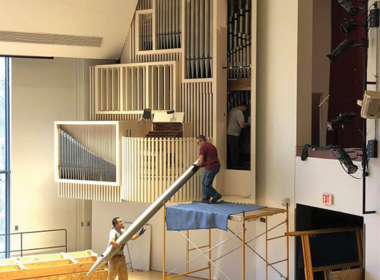
The beginning of November, 2001 we loaded the truck and headed for Princeton, New Jersey. The Organ Clearing House was hard at work using riggers to haul the windchests and other heavy components up into the rear gallery for installation. Originally built for the Peabody Conservatory in Baltimore, it inspired and thrilled generations of organists. Our hope is that it will inspire generations more in its new home in Princeton.

installation photo
Console gets prepared to be hoisted up into the gallery.
installation photo
Console is going up...
installation photo
...and over the railing and into position.
installation photo
One of six main chests is hoisted into the gallery.

Final Phase

The instrument is now back in its home in St. Paul’s Roman Catholic Church. All of the finishing work, voicing, tuning and final touches were completed in time for Easter so it would be ready to pour fourth the glorious sounds that made the name “Skinner” synonymous with fine organ builiding in the early Twentieth Century.

opus 38 detail
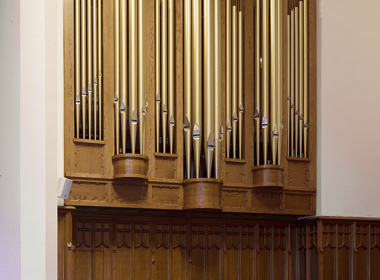
Pedal and Solo Façade.
opus 38 detail
Lower Great.
opus 38 detail
Solo Division.
opus 38 detail
Lower Great.
opus 38 detail
Solo Division.

Return to top.